


Build the foundational cybersecurity skills needed for the workplace — assess vulnerabilities across networks, operating systems, and endpoints, and implement defenses that protect data integrity, confidentiality, and availability.
Endpoint Security is the first course in the Junior Cybersecurity Analyst Career Path, covering the Endpoint Security domain of the CCST Cybersecurity certification. The course introduces foundational cybersecurity concepts including common attacks and attackers, threats, vulnerabilities and risks, current trends in the threat landscape, TCP/IP and network protocol vulnerabilities, Windows and Linux endpoint security, and threat mitigation and defense. By the end of the course, learners can identify common threats and mitigation techniques, understand the concepts of threat, vulnerability, and risk, and gain hands-on experience analyzing common attacks, securing endpoints, and detecting malware. Labs use Cisco Packet Tracer and virtual machines.
Curriculum Chapters
- 1. Cybersecurity Threats, Vulnerabilities, and Attacks
- 2. Securing Networks
- 3. Attacking the Foundation (TCP/IP Vulnerabilities)
- 4. Attacking What We Do (IP & Application Services)
- 5. Wireless Network Communication Devices
- 6. Network Security Infrastructure
- 7. The Windows Operating System
- 8. Linux Overview
- 9. System and Endpoint Protection
- 10. Cybersecurity Principles, Practices, and Processes
Skills You Will Learn
Explain how threat actors execute common cyberattacks including deception, network attacks, wireless attacks, and application attacks. Explain network security principles and configure a Cisco IOS device using the CLI. Explain how TCP/IP vulnerabilities including IPv4, IPv6, TCP, and UDP weaknesses enable network attacks. Identify IP service and enterprise service vulnerabilities and recommend threat mitigation measures. Troubleshoot wireless networks and secure WLANs against common threats. Explain how security devices and services enhance network security infrastructure. Use Windows administrative tools to configure, monitor, and manage system resources and security. Implement basic Linux security including shell operations, file system management, server administration, and malware detection. Evaluate endpoint protection strategies and apply antimalware, host-based intrusion prevention, and application security measures. Use cybersecurity best practices to improve confidentiality, integrity, and availability.
Technologies Used
Cisco IOS CLI
Cisco Packet Tracer
Oracle VirtualBox / UTM (Virtual Machine labs)
Windows OS administrative tools
Linux shell and security tools
Course Details
Course Type: Free self-paced
Time: 27 Hours
Modules: 10
Labs: 31 labs & Cisco Packet Tracer activities, 40+ interactive activities & quizzes
Prerequisites
None formally required. Basic TCP/IP networking knowledge recommended. Completion of Introduction to Cybersecurity and Networking Essentials recommended.
Certification & Career
Career and Certification alignment: This course is the first of three in the Junior Cybersecurity Analyst Career Path and aligns with the Cisco Certified Support Technician (CCST) Cybersecurity certification. It prepares learners for entry-level roles including Cybersecurity Technician, Junior Cybersecurity Analyst, and Tier 1 Help Desk Support. The recommended next course is Network Defense.
Achievements & Badges
Upon completion, earn a Cisco Networking Academy digital badge. Share your verified achievement on LinkedIn, your CV, or professional profile.
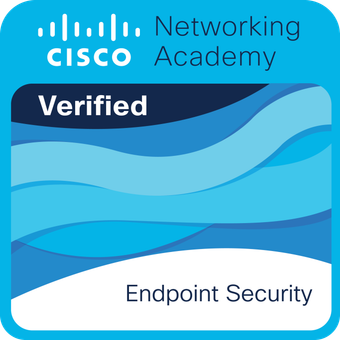
What Cisco verifies: Cisco verifies the earner of this badge successfully completed the Endpoint Security course. The holder of this student-level credential has a broad understanding of basic concepts of network security, as well as operating systems and endpoint security, aligned with the CCST Cybersecurity certification objectives.
Ready to Start This Course?
This course is delivered through Cisco Networking Academy — the official global learning platform. To enroll, click the button and you will be taken to the official course page on netacad.com. If you already have a Cisco Networking Academy account, simply log in and click Get Started. If you are new to the platform, creating a free account takes less than a minute. Enrollment is completely free.
You will be redirected to netacad.com.
A free account is required to enroll.